Thistles and Bracken
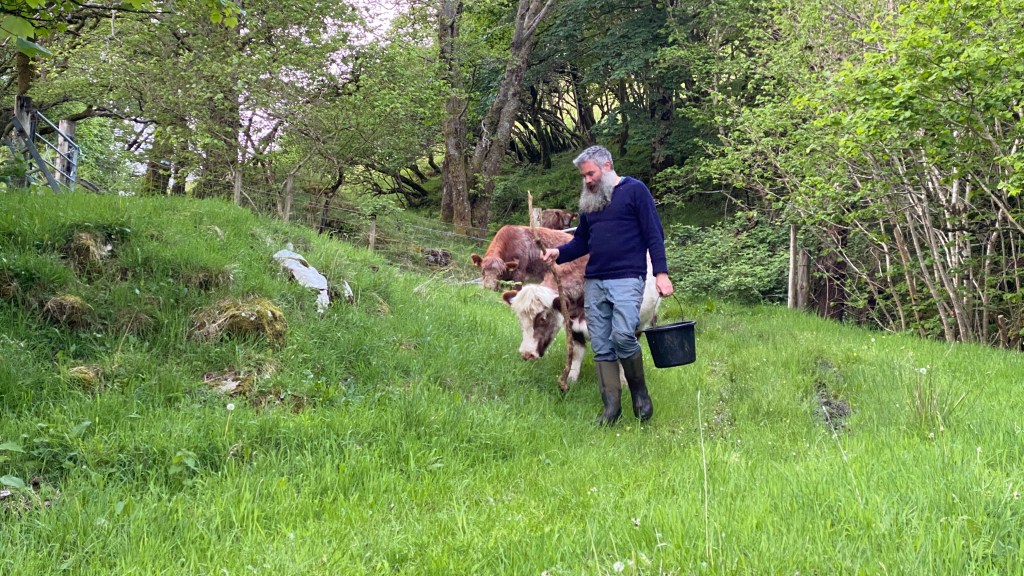
Our croft has two halves. The top is oak wood and hill pasture, and the bottom is meadows, hazel woods, and coastline. These are separated by a road. The cows spend time in both (we also now have a few sheep as well) and if anything, seem to prefer the oak woods on the hill. It’s a larger, more varied, area and they become noticeably stronger from all the climbing they do. They love the meadows in spring, with all the new tastes, and have a particular penchant for pulling sticky willy from the edges.
In the past, the meadows were “improved” with lime and rye grass seed. We don’t know if glyphosates were used, but it is common practice these days to deal with thistles, docken, rushes and bracken.
We won’t be using herbicides on the croft. Not only is there evidence of a link with cancer in humans, but glyphosates have been found to reduce the number of earth worms and tadpoles and there is growing concern about their effects on micro-organisms in the soil. The decline in insect and bird life in the UK from the 1970’s onwards also coincides with pesticides coming widely into use.
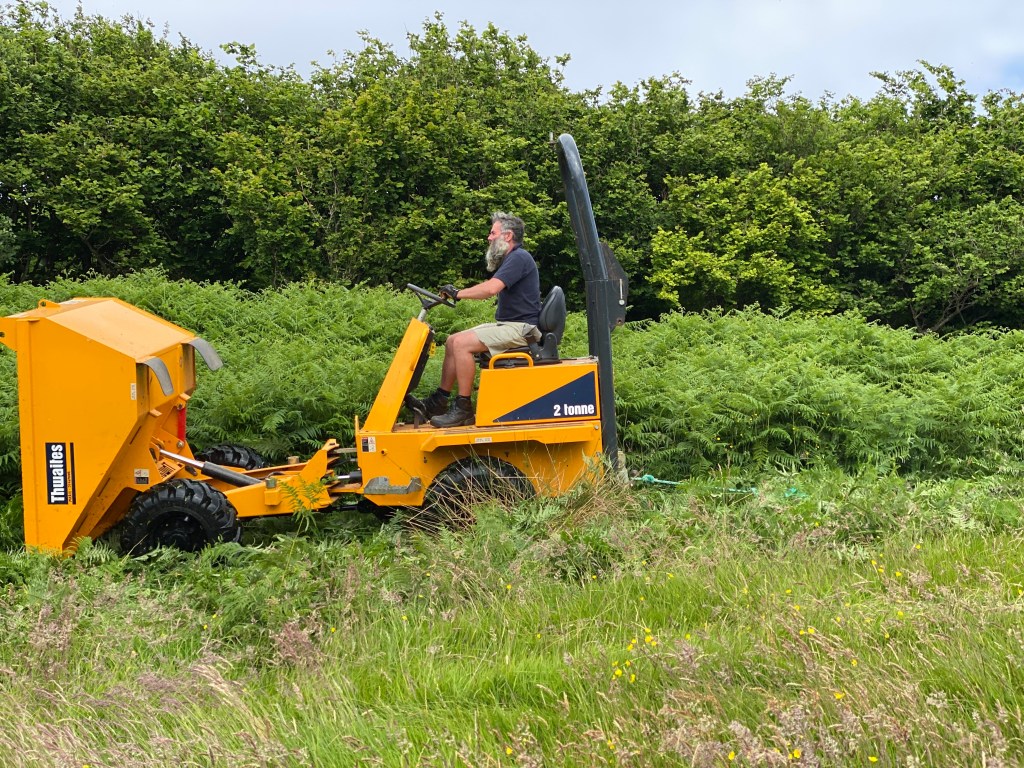
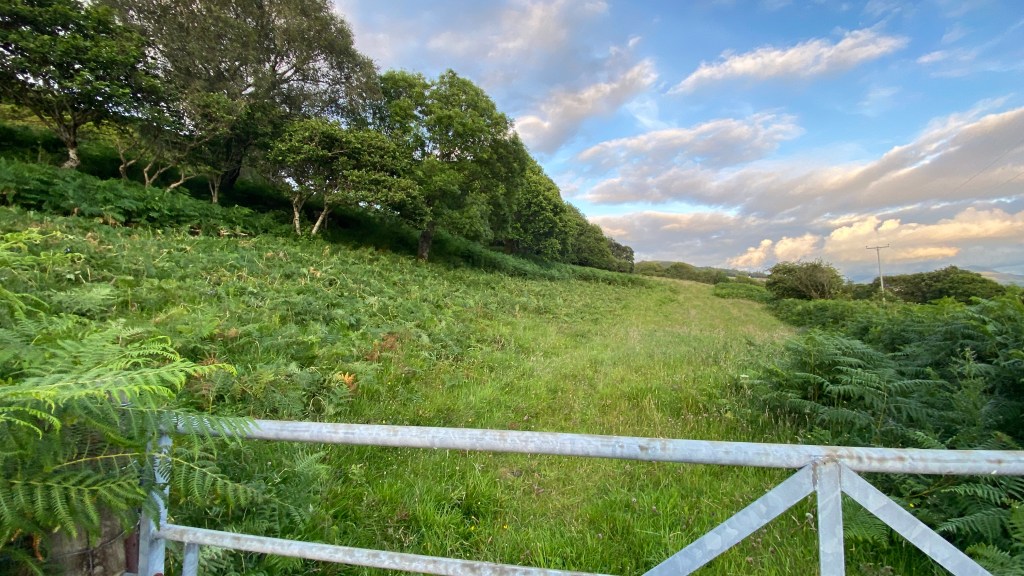
So, what to do about the thistles, the docken, the rushes and the bracken? The bracken was the easiest decision; it obliterate other species in some areas and has made parts of the croft impenetrable. (Although it is also perhaps an indicator of where woodland should be.) At the same time, we have found, if we get the timing right, rolling is highly effective (and not an unpleasant job). Now, with the use of a bracken roller, kindly lent to us by a neighbouring crofter, we are now reclaiming large areas of the croft.
The thistles and docken affecting the meadows are trickier. The birds and caterpillars clearly love them and although the cows avoided the grass around them in the summer they are now knee deep as their prickly strength wains. Isabella Tree writes about thistles in her estate at Knepp in her book “Wilding”; they let the thistles go and for a few years they took over, until one summer a massive influx of butterflies decimated them all and they never returned. She asks whether our urge to remove certain species is aesthetic. Have we become used to meadows of uniform green when, before the war, scrubbier land was more the norm? But was Isabella Tree’s experience with the butterflies a one off? Could we just end up with a lot of thistles if we let them be?
We are in a fortunate position, because of our day jobs, to keep stocking low and use trial and error in our field management. We’ve topped the thistles in some areas and in others left them. It hasn’t been easy resisting the urge to cut them, but it turns out managing for biodiversity and increased wildlife is sometimes as much about what you don’t do.
 Rhemore Wildcroft