Connections
Last month, I talked about glyphosate-based herbicides (such as Round-Up) and their damaging impact on micro-organisms in the soil, which, studies have shown, can have a transformative effect on plant growth and resistance by extending root networks. The importance of networks (both below and above ground) is the subject of this month’s column.
The relationship between ecological restoration and people’s connection with the land is something both Alasdair and I had come to from different angles before we met, as the two must go hand in hand. All land is ultimately a shared resource regardless of who owns each individual piece; as we all need air to breath, food to eat, water to drink and a piece of nature to step into as fundamentals of living. Rewilding Britain argue that rewilding is good for the sustainability of local and wider communities as well as enriching people’s lives and their first principle of rewilding is “to support people and nature together’.
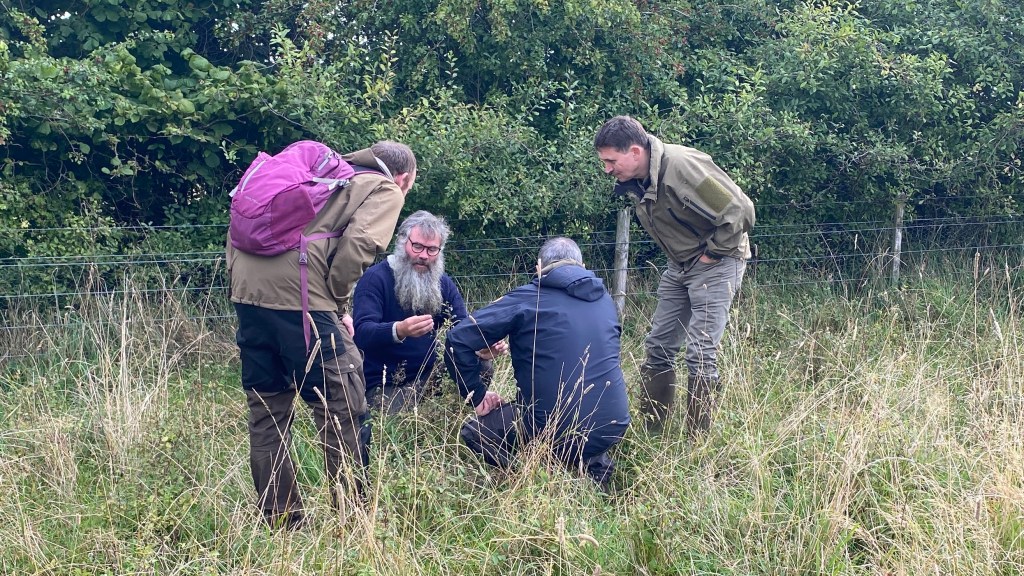
We are still working out what this means for us at Rhemore. For, as well as planting trees and vegetables, we want to grow a community around our croft. We’ve already had lots of visitors – a network of conservationists, ecologists, foresters, farmers, academics, and artists who we hope will keep returning to help us reflect on what is here and what we are doing. This summer we also signed up to WWOOF, a scheme for volunteers on organic farms, and had a total of eight young people from across Scotland and Europe come and stay with us. This injected a whole new energy into the place and some of them have already returned. We also attended a networking day for members of the “Northwoods rewilding network” which we joined last year. We explored the Bamff Estate, who are also managing for diversity, saw lots of thistles (!) and the incredible work the beavers they have introduced are doing for the land (and for tourism) as well as talking about conservation grazing, woodland generation, planting yellow rattle, using no fence collars, and all kinds of other useful stuff with the other landowners there. Alasdair was also able to identify exactly what was nibbling the Bamff black thorn suckers.
These networks, along with our friends in Morvern, other crofters, foresters and farmers and our families (especially mum who often looks after the place from time to time) are as important to us as the hidden networks of microbes and mycorrhiza in the soil and the woods are. It’s not fully understood how they work or are created, but they are known to protect the plants and trees and help them grow, sending signals about disease and infestation and even useful nutrients from one end of a wood to the other. Without mycorrhiza, trees will often not germinate, and you might argue it’s not a fully functioning woodland. This is also true of us and our croft which cannot flourish without the support and input of the many people we are becoming connected with as a result of what we are doing.

 Rhemore Wildcroft