Crofting and it’s role in a sustainable Scotland!
Merry Christmas from the Wildcroft. Alasdair and I have just returned from a Scottish Crofting Federation gathering on the theme of “Crofting and its Role in a Sustainable Scotland”. It was one of the first crofting events we’ve attended, and it fitted so well with what we are trying to do, I thought I would write about it for this month’s column.
It was mainly crofters there and we met lots of interesting people. There were discussions on local food production, carbon reduction, net zero, health and well-being, the balance of ages in small communities, and the potential crofting has to contribute to all of these.
I came away understanding that crofting is not only an important part of Scotland’s heritage, but also that crofts and crofting have the potential to be of enormous benefit to Scottish society in what will probably be a period of uncertainty and transition over the next few years. Agricultural policy and crofting legislation are currently under review and may well change to reflect the move to carbon net zero and the recognition that biodiversity loss in our landscape has become of critical importance to food stability. The discussions at the workshops were positive and this was seen as an opportunity to revive crofting as an important contributor to carbon reduction, community health, and ecological recovery.
Crofting is a great way of re-peopling places, encouraging the connection between people and the land, and providing local food sources. Crofts are often small scale and were set up to enable people, who might not be able to otherwise, to have a patch of land to support themselves.
They give security to people wanting to set up a rural business without necessarily having to own the land and make it worthwhile investing for the long term as a tenancy can be passed down through a family. They also make it easier for people to build homes that can’t get sold straight on as second homes or holiday properties. Crofts attract people to small communities and the best way to protect land is to make sure as many people have a connection to it as possible.
Some of the current problems identified at the conference were a lack of available crofts, the affordability of crofts (which have become increasingly overpriced) and that many crofts lie unused and abandoned by the tenants. Hopefully better legislation can resolve the latter two issues, but it would be great to have enough new crofts created to enable all those who want a croft and can present a decent land management plan to have one at a reasonable price.
This got us thinking about ways in which new crofts could be created without the headache of community land purchase.
Perhaps every time a large area of land is sold in the Highlands a few crofts could be created that are publicly owned? Whenever a new housing development is built, a proportion must be affordable houses, so why not do the same with land? And a huge amount of Forestry Commission Land is not being used for the benefit of local communities and could easily be turned into crofts rented to tenant farmers or foresters. Once a croft is created and the tenancy is assigned, which could be done locally, there is little management needed on the part of the landowner. If the legislation could be changed so that smaller crofts could be created this might also help.
So, little news from our own croft this month, but in the new year I shall talk more about how some of this applies to our croft and what we can do about biodiversity loss and carbon sequestration.
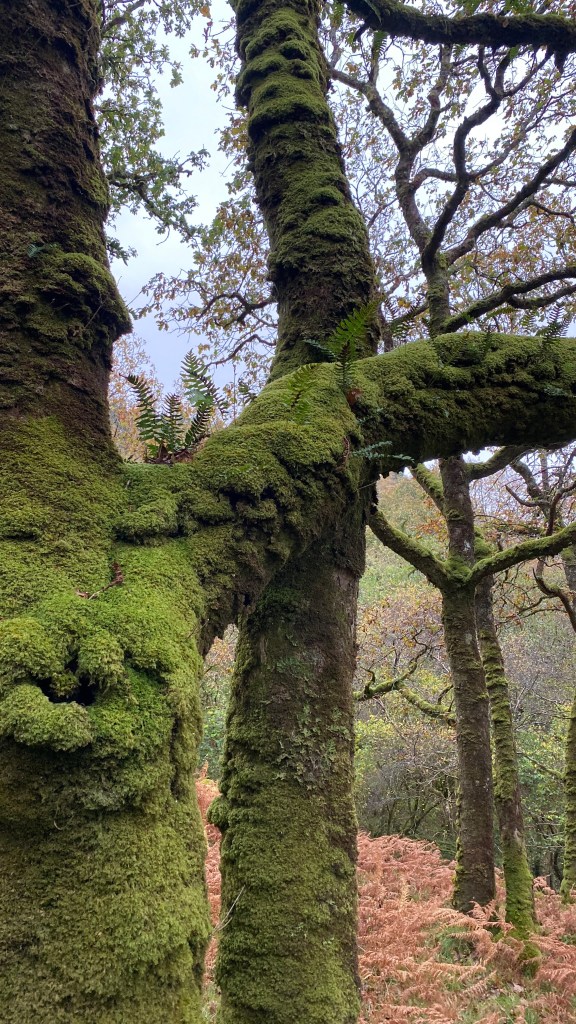
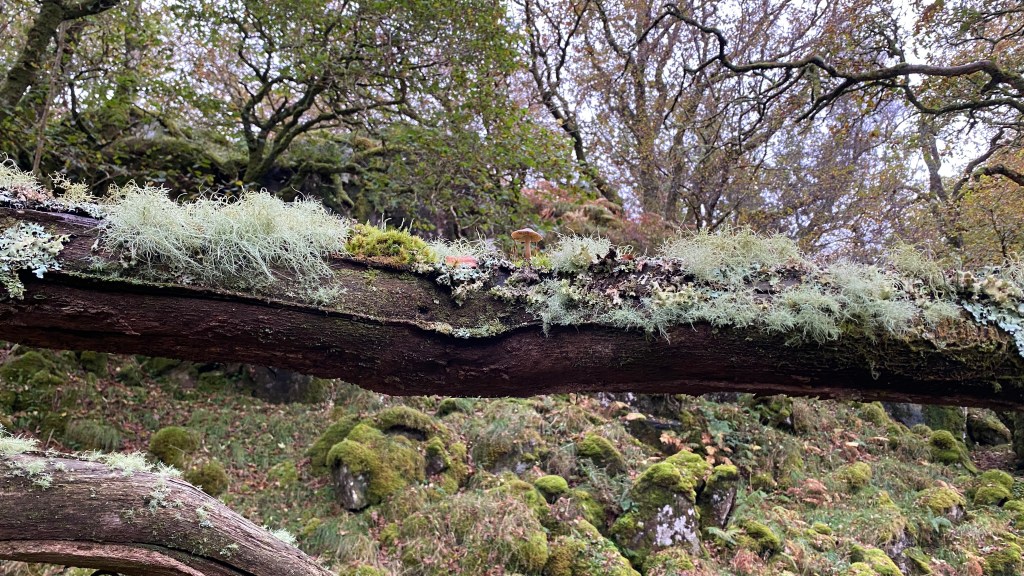
In the meantime a few pictures this month of our rainforest.

 Rhemore Wildcroft
Leave a comment