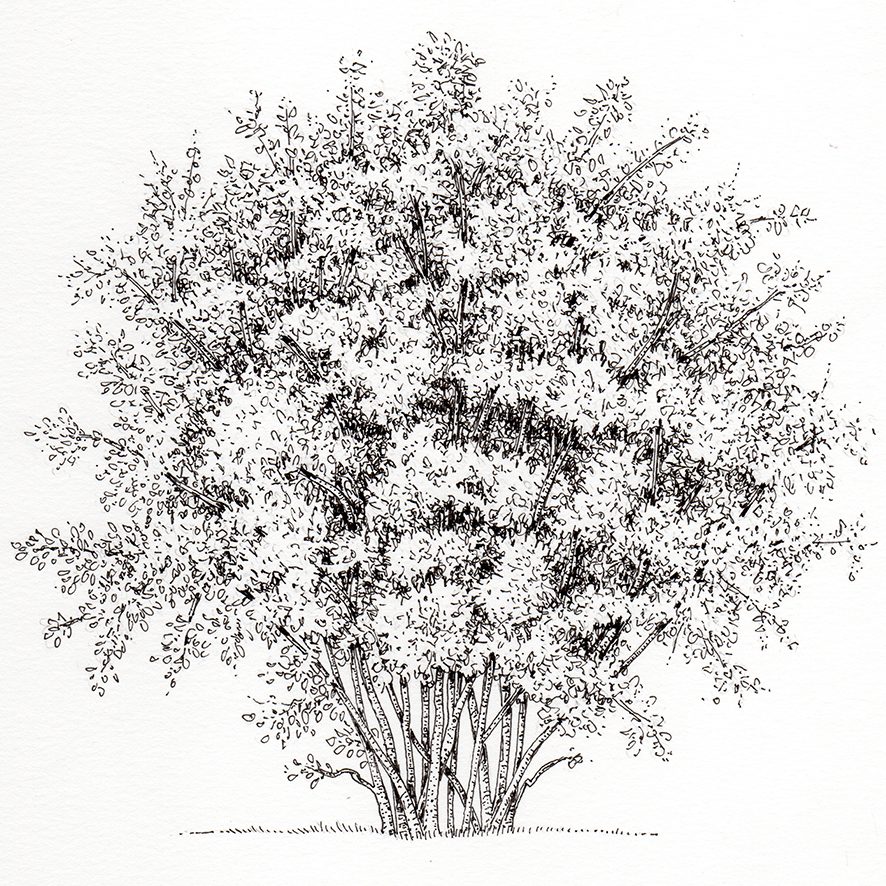
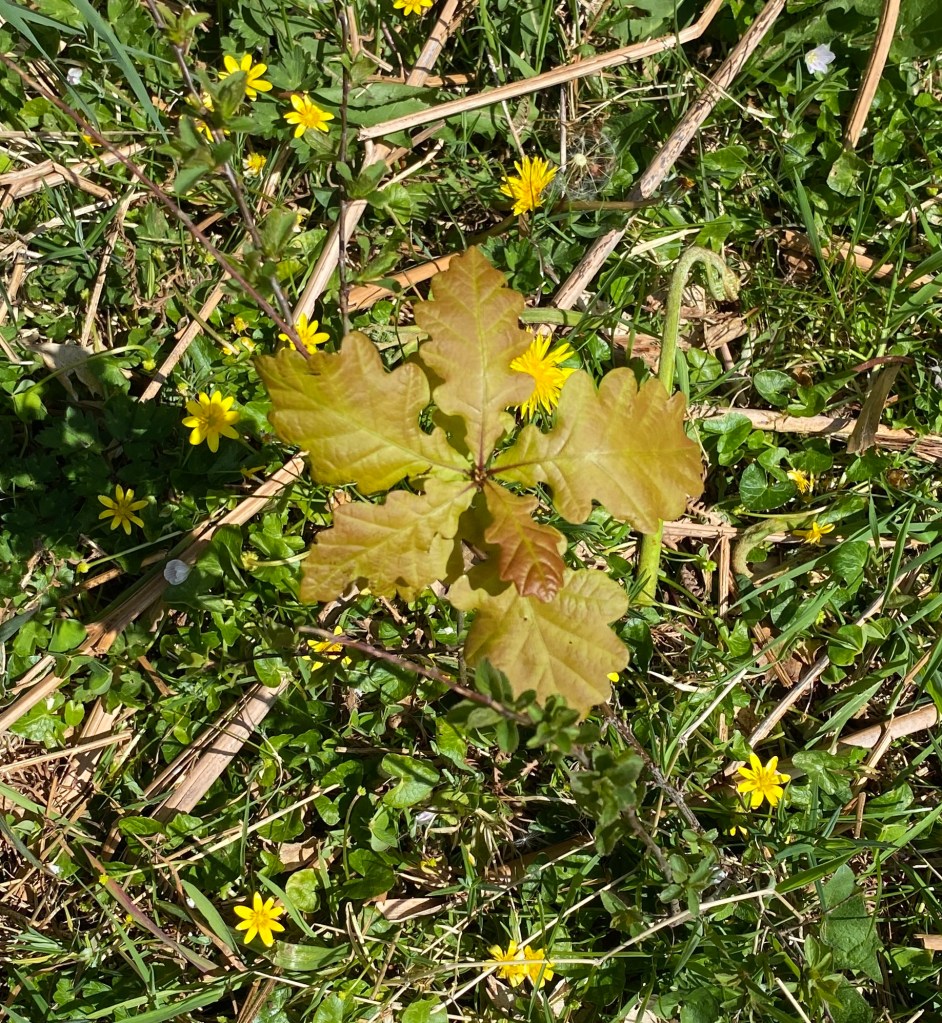
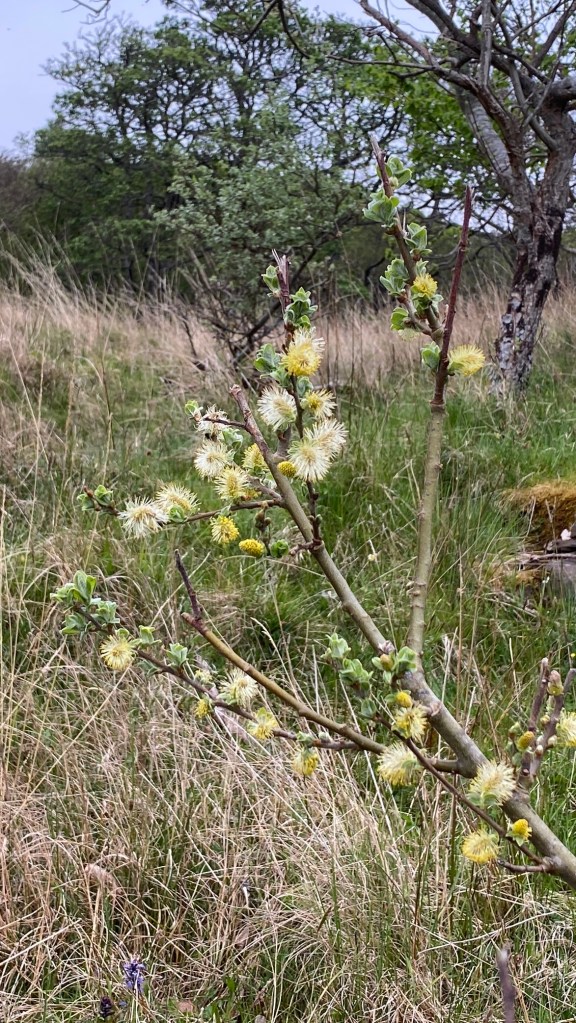
May has been busy on the croft. Everything has suddenly come to life. The woodlands are full of flowers, the grass is growing faster than the animals can eat it and we’ve already run out of space in the raised bed, partly due to an ad hoc tree nursery that’s developed.
We’ve had our first lambs, with the only sheep still to lamb being the old ewe who came with young hoggs to look after them.
We weren’t sure whether to keep sheep. They’re kept on all the crofts in Morvern so it’s a tradition and there’s lots of local expertise, low intensity grazing can also be good for the land. But the large-scale industrialised sheep farming that followed the Highland clearances has caused massive long-term damage to Scotland’s hills and is responsible for biodiversity loss and soil erosion. Farmer and ecologist Frank Fraser Darling coined the term “wet desert” to describe what was happening here in the West Highlands way back in 1955.
We decided we would keep it small scale and get a hardy older breed that could be grass fed. We were offered eight Hebridean/Shetland cross hoggs and a ewe from Mull. The impact they’ve had on the fields has been small and they’ve mostly looked after themselves including during lambing.
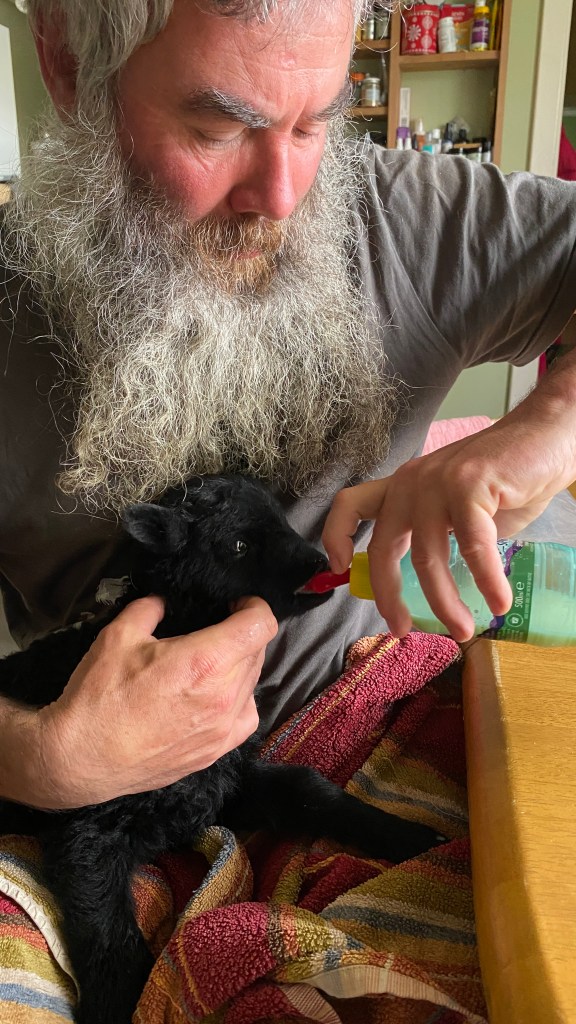
We put the cows in the fields around the sheep hoping they might see off predators, as we have one cow that chases off anything small that moves. Still on the fifth day we thought we’d lost a lamb to a fox. After a long search, we found it abandoned. Our neighbours helped us warm it up and feed it, we put him by the fire overnight and he was back on his feet by the next morning, happily following us from his pen into the field to see the other sheep; our first “pet” lamb. After a few days it became clear his mother was still attached to him, even if she didn’t have enough milk for both her twins and we managed to get him to go back to her after each bottle so that he could live in the field. It’s quite a lovely and comical sight watching him stagger back to his mum with his belly full, drunk on milk.
Spring has brought more visitors to the croft with lots more to come in June. Talk often turns to nature conservation and farming. One visitor told us a story of a farmer’s son he knew who left to study economics, then returned to advise his dad and his friends who were farmers. He found every single farm had hit a point where increasing profits had turned to increasing losses, pushed to breaking point the ground had given up and could give no more. One solution in the past was to bring in industrial fertiliser (we have Betty Rhemore’s records of this happening on Rhemore too) but this is yet another source of carbon emissions and fertilisers leach into waterways, groundwater, the air and even our bodies and is harmful and there comes a point where you can exhaust your resources even with fertiliser.
I still don’t see myself as a farmer but working the croft has made me think a lot about the different ways people have farmed and worked the land through the ages; for subsistence; for growth, for profit (small and large), for regeneration, and the different things that we put value on. Government policy, subsidies, land ownership and market forces all have an impact on how people work the land. I was shocked to find when I did the calculations on the cost of the ewe’s milk substitute that there is probably more money in making milk powder than farming fresh food these days.
It has all made me wonder whether it’s the notion of perpetual “growth” that is the problem and the idea we can’t have prosperity without it. I don’t mean the growth in the garden, or the fields of our children, or knowledge, but growth in profits, “GDP”, in producing lots of stuff we maybe don’t need. This kind of growth always comes at a cost, whether we acknowledge it or not. A cost that is usually nature, or other people. Perhaps we need to start thinking about what it might mean to have “enough” and whether we can prosper without taking more than we need from each other or from nature.

 Rhemore Wildcroft
Leave a comment