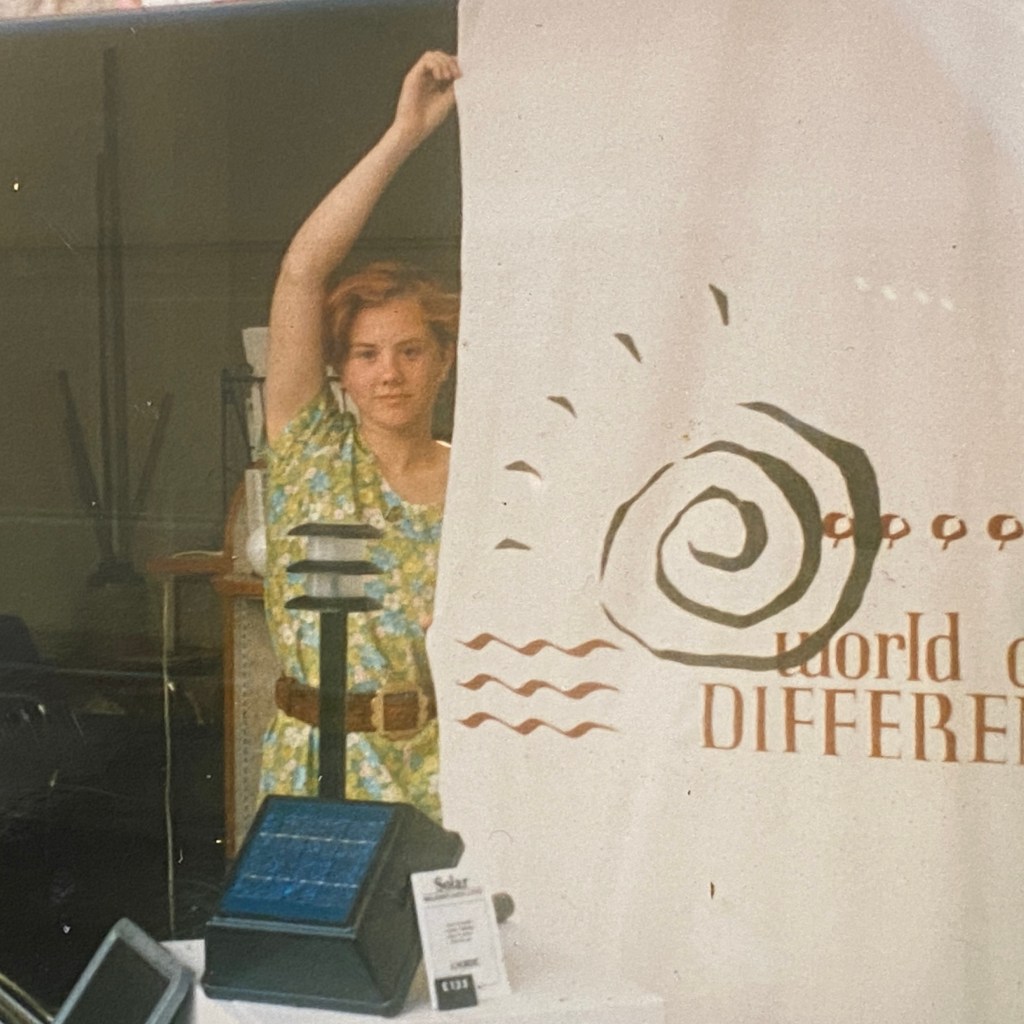
Ever since we got livestock on the croft, people have asked me how I will feel about killing my own animals, especially ones I have become attached to. Some of our younger volunteers have been adamant that the experience will make me vegetarian. They didn’t know that I was once a vegetarian when I was a teenager, that is before I went and volunteered in Africa.
Back then in the 1990’s I knew about climate change but didn’t know about the links with over-intensive animal agriculture. I was concerned with animal welfare, particularly factory farming and the way that animals are turned into objects for mass produced cheap meat, eggs and dairy. Before going to Africa I briefly lived on a commune in Dorset where I milked cows. When a calf needed taking from its mother, the three nights of crying from the cow put me off drinking milk for years, especially when I found out this was a routine part of milk production.
In east Africa, each household kept a few of their own animals and ate meat only on special occasions (such as a visitor arriving from a foreign country) so animal welfare was not an issue. The meat we were given was precious and it would have been rude to turn it down. When a western person mentioned they didn’t like how animals were treated our hosts were affronted and pointed to their animals who were cared for practically as pets.
We too have got to know all of our animals. We started things small so we don’t have that many. We haven’t needed to buy feed, (which is often mainly molasses or grown using land that could be used for human food), because our animals are so low stocked we have enough grazing. The idea was never to have large numbers and certainly not interbreed so, even though all our lambs had nicknames and we were particularly fond of Basil who was bottle fed they all had to go and last month we took them to the slaughterhouse on Mull.
The Mull slaughterhouse is small and community owned as it is vital for the local economy especially for small scale farmers and crofters. We were still both nervous and went together. They were friendly and showed care for the animals when they were unloaded. We came away feeling confident that we had done the best for them. They had a short but good life. They were respected as sentient beings. The seventeen miles to Salen was the only time they were transported and they had the least stressful death they could have had (with the possible exception of doing it ourselves, but who knows how that might have gone!).
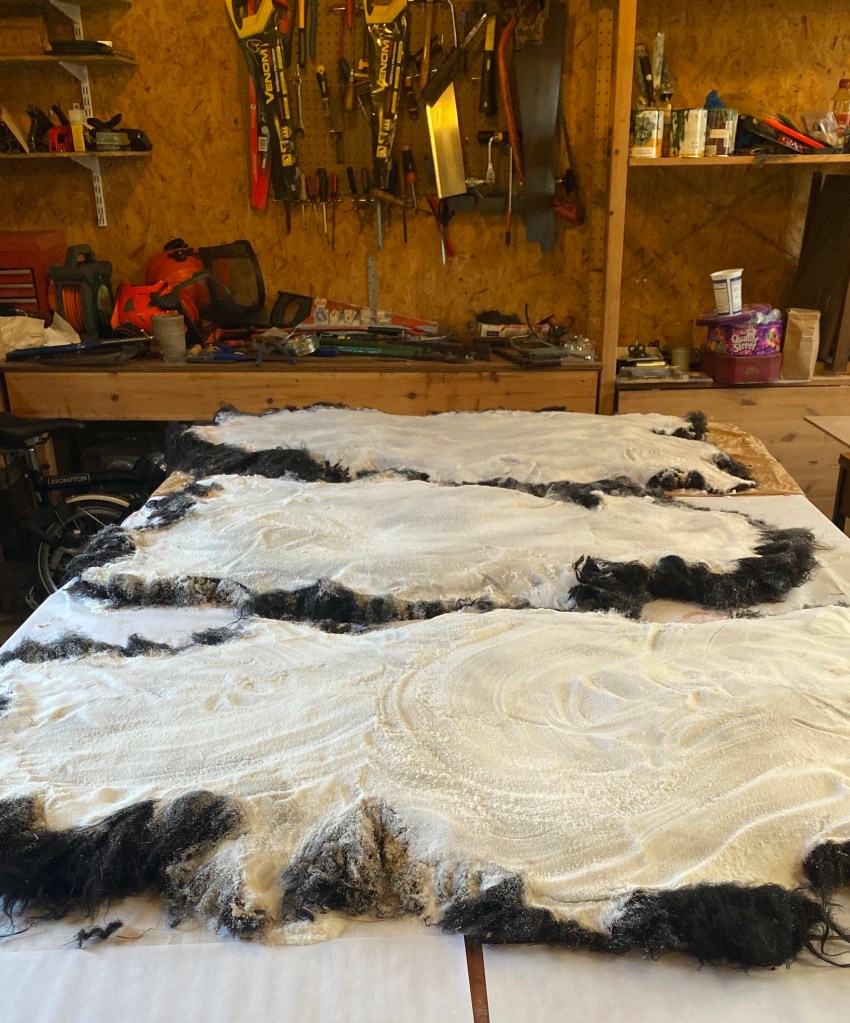
I decided I wanted to put as much of them to use as possible, and tried to find out if I could keep their skins. I found had to register with the government to take them and then find somewhere to tan them. I found two tanneries that would do this in the whole of the UK but would have to salt them myself, changing the salt every couple days for a few weeks. So I filled in the forms, ordered the salt, prepared our workshop and let the slaughterhouse know. I was shocked to find that most sheep skins in the UK go into landfill despite the cheap ones for sale in IKEA.
When we returned to the slaughterhouse for the skins the same day, we were told by both the butcher and the vet that our animals were in particularly good shape. The vet told us how rare it was for west highland sheep to have healthy livers but ours did and we would have offal to take home as well as good lean meat.
I felt a flush of pride. The same flush as when you cook a great meal, grow a gigantic cabbage, or bake a good cake. The nineteen year old vegetarian who went to Africa would never have dreamt she would farm meat, but I had caught the bug. We had produced high quality food, whilst managing the land for biodiversity. We probably hadn’t made any money, but I felt immensely proud (and that was before I had even tasted it).
I worried salting the skins might prove harder as it was easy to identify which animal each came from, but as I salted Basil, I felt a connection with generations of humans who ate the meat and salted and tanned the skins of animals they knew, named, cared for, and loved.
When the meat came back after being hung, I cooked lamb’s kidneys for my dad. They were perfect in shape and colour, rich in their taste, and good. The shanks were leaner and more delicate than any I have ever had from a supermarket, maybe as a result of being grass fed. The pride I felt deepened, but it was tinged with sadness. Sadness because most of the meat we eat in the UK is not grown this way and my guess is that, if we had even half an idea of how animals in industrial scale farming are treated, we probably wouldn’t eat nearly as much meat as we do.



 Rhemore Wildcroft
Leave a comment