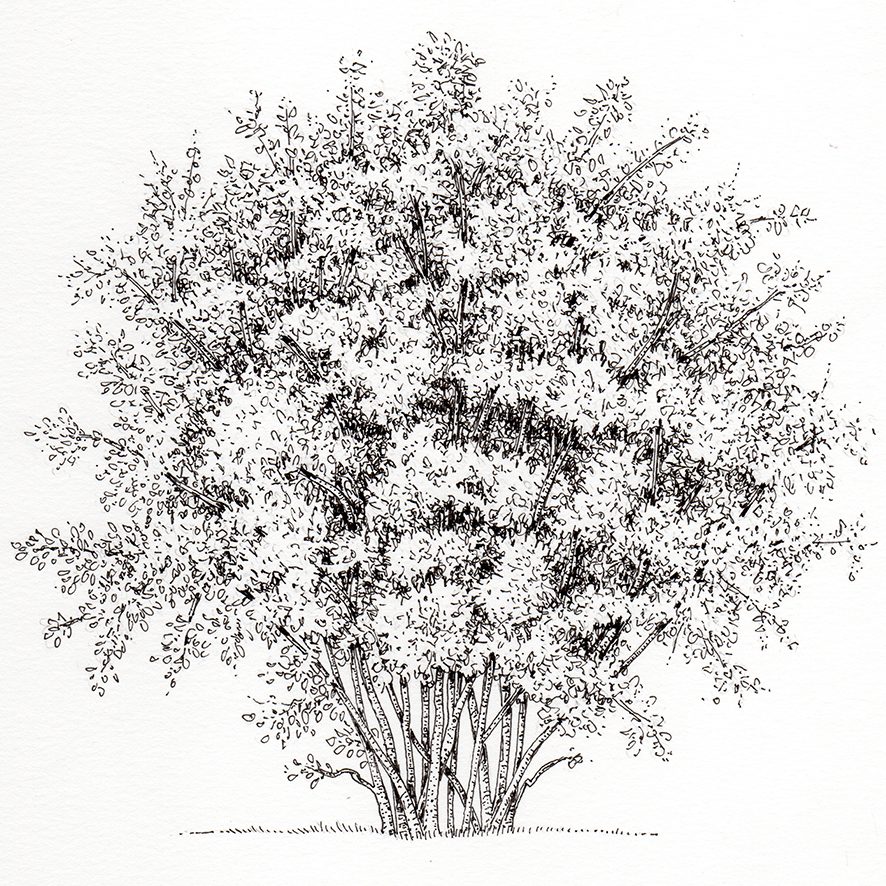
An abundance of catkins on the Hazel trees has marked the first signs of spring on Rhemore croft. I always find winters hard. I found them hard even before I moved to the Highlands or the croft. Sometimes it’s only when the warmth returns and you are no longer waiting for the light that you realise how hard it’s been, overwhelming even.
So much gets put to the test in the winter. Is there enough firewood? Enough hay? Enough grass? Enough dry ground? Are the cows losing shape, are they strong enough? Am I strong enough? This testing reveals the fault lines, places where we are overstretched, or ill-prepared.
We made enough hay to get us through the winter, thanks to lots of local help, but realised that, even with the hay, we have too many livestock for what we want to achieve in terms of nature restoration. The cows make much more impact in the winter months, it is a fine balancing act between protecting the land from over-grazing in the winter and keeping it grazed enough in the summer. After deliberation we decided that Bramble, the most unpredictable and badly behaved cow, should go to the slaughter and now we have our first beef which is some of the best I have tasted, even though she was quite a small cow, not that young and a bit grumpy. Later in the year we will try and re-home another beast.
It is the small things that get you through. This month we received an email from Ila Currie who lived on the croft as a child in the early 1950’s and went to school in Bunavullin with Bibby and Catherine Cameron. She had been reading these articles on our website. She told us her parents had two cows, one horse, some hens, a pig, a dog and a cat on the croft. They earned their living working for Alice Horsman on Drimnin estate. It was a hard life which was not economically viable even then, but, from a child`s point of view, it was magical. I don’t know if she received my reply, but I do hope to hear from her again.
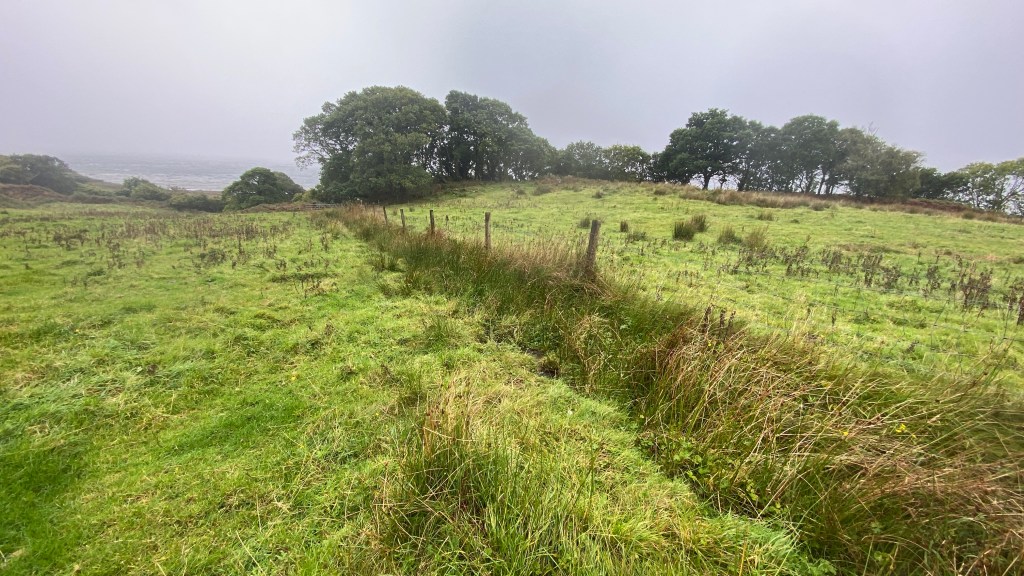
We also received a report on our water courses from riparian expert Maja Pepper. This was funded by Scotland: the Big Picture. Maja came to visit last November and the report was a reminder of how nice it was to have her come and stay, and walk with us on the croft lending us her insight. In terms of riparian habitats it told a familiar story. The drainage ditches and field drains on the croft no longer drain the land very well, but have removed the dynamic natural habitats where water and land used to meet. So, we are now left with the worst of both worlds, soggy fields unusable for livestock and too wet in the winter, that provide few riparian habitats for plants, insects and birds at any time of year.
But we were surprised by how excited Maja became about the Killundine River. This forms the south-east border of our croft and Maja observed it as an optimum spawning habitat for migratory fish, and saw no way it could be improved. There are no migratory fish in the river and listening to some local Ardnamurchan wisdom from someone whose family has been here for generations, this probably has more to do with the salmon farming than anything that has happened on the land. As salmon in highland rivers were once abundant.
The field drains and ditches will be a difficult fix. We could open them up again, and we might do this in a few important sections, but this will cause other problems. We could take them out, but this would be a lot of work with not a great deal of environmental gain given how disruptive this would be. Or we could intentionally block them. Maja made it clear that there is a large element of unpredictability in doing this. Water flows where it wants to and natural water courses cannot be controlled.
I found something quite reassuring about Maja’s certainty on the fickleness of flowing water. It was a reminder that we cannot control nature, or the passage of time. The ebb and flow of life takes its own course even if, at times, it can feel overwhelming.
All we can do is be open to the unpredictable direction things go in, with the certain knowledge that spring always comes again, and that testing times reveal our strengths as much as our weaknesses.

 Rhemore Wildcroft
Leave a comment