December wasn’t an easy month for the animals at Rhemore. The relentless rain and wind followed by a harsh cold snap in January took its toll on the cows and they got through a good proportion of the winter store of hay. Seven Greylag geese took up residence in the field in front of the house became five, and then, now four. On the coldest day in the first week in January we found one of the chickens, Mrs Frissell, in the middle of the field alone and not moving. We brought her in and put her by the fire in a cardboard box. After a few days she began to drink and eat again, then wanted to leave her box, so we returned her back to the hen house, but she died a week later despite seeming to improve. She was old, but it was still sad to lose an animal to ill health and heightened the sense of winter taking its toll. Last year’s poor summer probably didn’t help.
When I met Alasdair he told me winter was his favourite season, I concluded he was being intentionally contrary, to be different as I simply couldn’t imagine anyone liking winter. Growing up in the city, winter was an inconvenience, you left to go to school or work in the dark, layered up to go outside, unlayered to go into an over-heated building, then huddled by an electric heater in the evening.
I brought that mentality with me when I came to the Highlands twenty year ago, seeing winters as something to grit one’s teeth against and endure in return for the glorious long days of summer.
I don’t know whether it has been stepping away from other work to focus on the croft, a conscious decision, or approaching being an old Cailleach myself, but things changed this year.
As winter loomed, Alasdair sent me an article on a study in Tromso and Svalbard that found people’s attitudes to winter becoming increasingly positive further north. I read Katherine’s May’s Wintering, and, despite endless December weeks of rain, I found myself embracing the season, allowing myself to slow down, accept its (and my own) limitations. I gradually started to value the quiet and the dark.
Winter on the Croft has a different rhythm from the summer. There are more daily jobs in less light; chopping kindling, bringing in wood, lighting fires, driving the hay out to the cows each day on the quad. Shed doors need checking and shutting against the wind and the beasts moved regularly to give them a chance to forage. The winter roughage of willow, bog myrtle, ivy, young shoots of oak, hazel and rush and even seaweed to be found in different corners seem to be incredibly good for the cows particularly their natural defences.
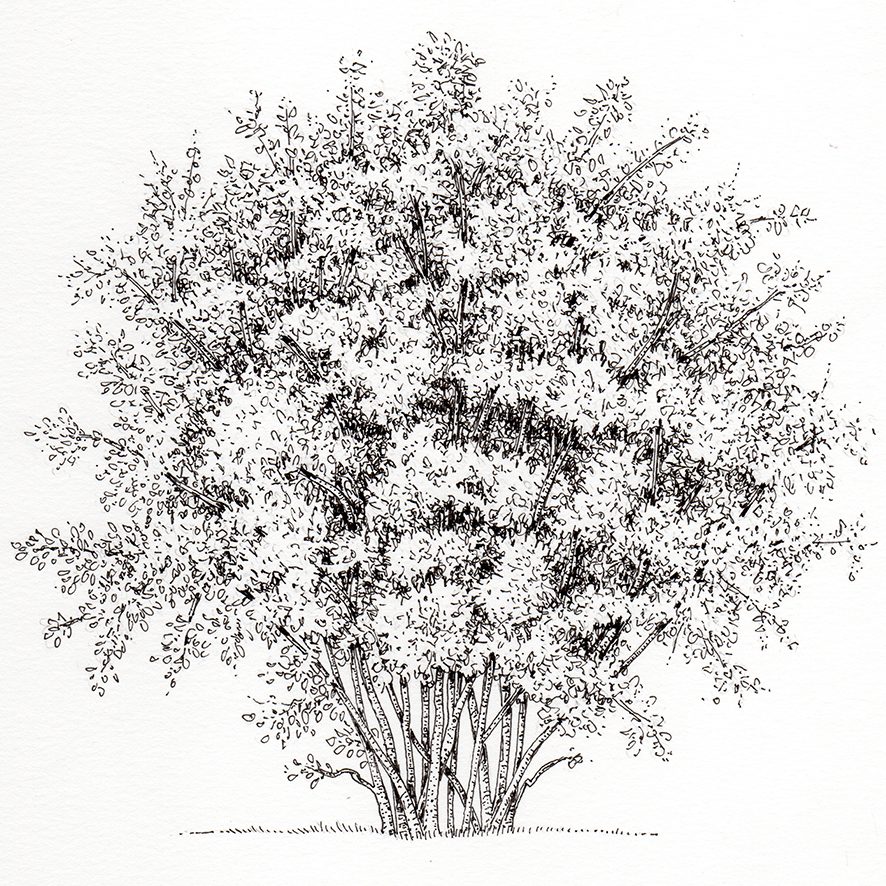
I have tried to make the most of the daylight hours; preparing veg beds for next year and helping to fix fences. I’ve enjoyed the changes in light and colour. I used to believe winter was barren. This year I noticed the birds that stay; the Fieldfares and Starlings catching the wind above us, like leaves blown from trees, as we walk back from the shore each morning; Jays and Woodcocks startled in the woods; the drill of a Woodpecker accompanying us as we work. Instead of seeing desolation, the stripped branches of trees, silhouetted against the sky, have revealed fractal canopies to be relished and I have noticed new buds already there, waiting.
I have let myself enjoy the long evenings, cosied up in our own sheepskins, fires lit in different parts of the house, and used them to reflect and plan where to direct the inevitable burst of energy that spring will bring. Perhaps this slowing of pace will temper the frenetic activity that often overtakes April and May. Maybe I will be better prepared this year, maybe not.
Whichever is the case, now, in an unseasonably mild spell for late January, the almost spring-like weather, although gratefully received by the animals, has made me feel, for the first time ever, that I am not quite ready for winter to end and that when it does I will look forward to the next one.
New buds in January
 Rhemore Wildcroft
Leave a comment