Notes from a Wild Croft March
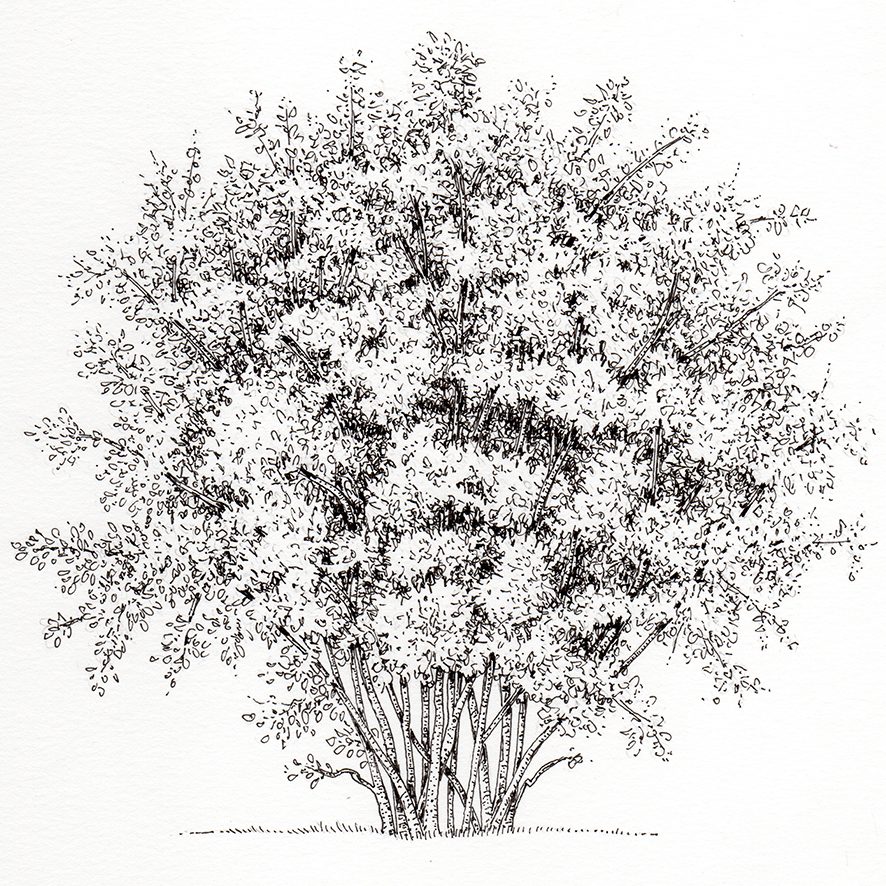
Things are busy as ever on the croft. The kale in the polytunnel from last autumn has kicked back into life, the strawberry and raspberry plants have started to grow and blossoms have appeared on the peach tree. I have taken this as a signal to start this year’s veg from seed, and have potted tomatoes, cucumbers, chillies and broad beans. We’ve felled a couple of unwanted sycamore trees, (sycamore grows vigorously as an introduced species outcompeting important native rainforest trees like hazel) and we’re now splitting firewood for next winter. We still have hay left from the load we made at the end of summer, and the cows are grateful for the extra feed every day on top of what they can forage from the croft.
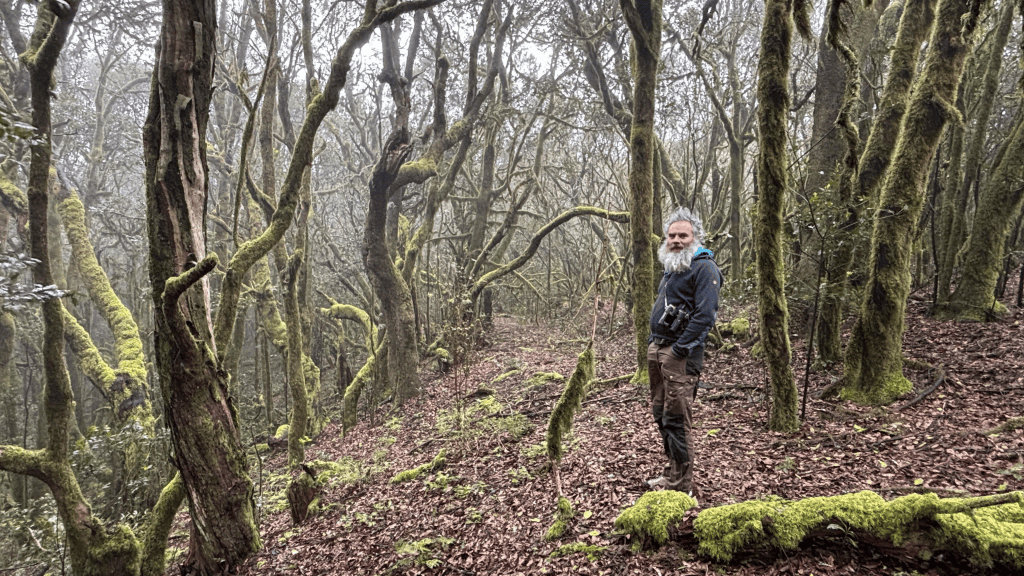
We did manage to get a holiday. At the beginning of winter I persuaded Alasdair to come away by booking an off-grid cabin in a temperate rainforest on La Gomera, (one of the Canary Islands). It was a bit of a busman’s holiday as it was striking how similar the rainforest there was to the ones here, particularly to the hazelwood rainforests in Morvern.
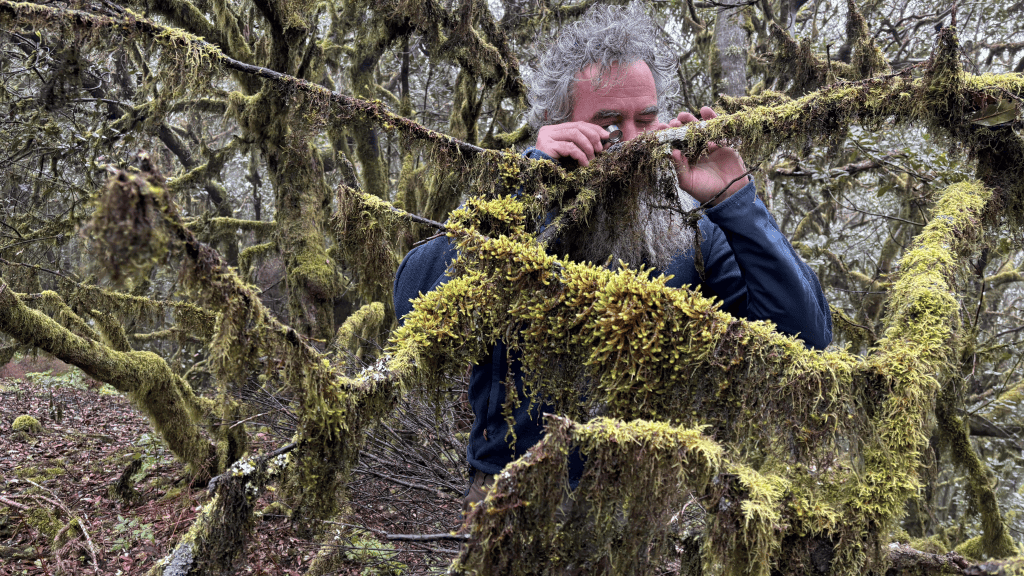
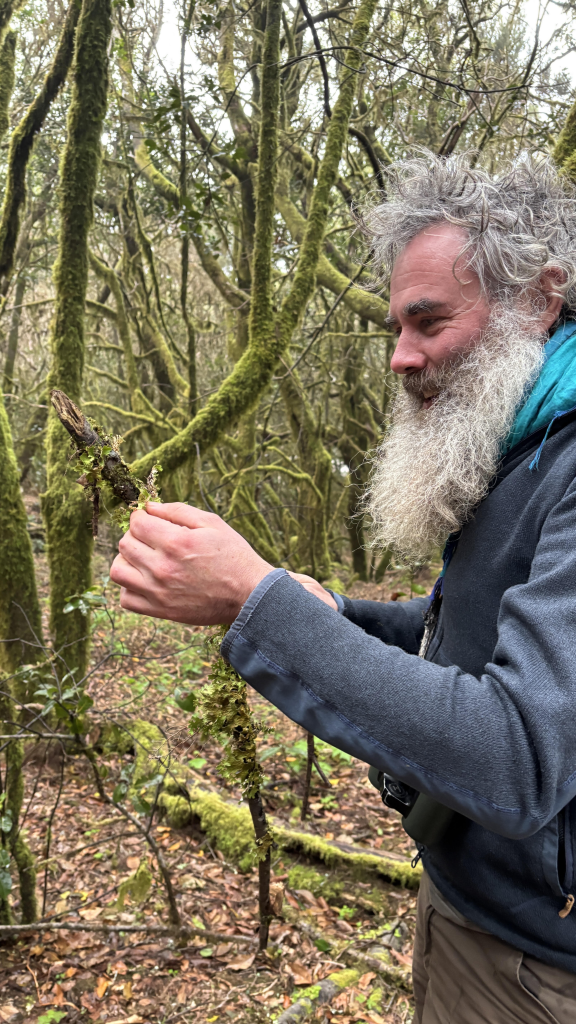
On La Gomera the rainforest is Laurisilva, evergreen hardwood trees like laurel. Like the hazelwood rainforest in Morvern it forms a significant proportion of the world’s habitat of its kind (although the total area for hazelwood isn’t known and is a living remnant of a once much more widespread ancient woodland. As a result it is full of endemic species that have evolved over hundreds of thousands of years. On the other hand, many species can be found in both Morvern and La Gomera including easily recognised species like tree lungwort, beard lichen and dragon’s skin lichen.
One key difference between the woods in La Gomera and in our area, was the number of young trees. The Garajonay Park has struggled with wildfires, and you could see the evidence of this, but in the deepest parts of the woods the mix of old and new growth was striking whereas it is rare to see a lot of new growth in rainforest sites in the Highlands. This probably reflects on the different kinds of land ownership and forest management.
In La Gomera most of the rainforest has been protected as a national park since the 1980’s and has only been very lightly grazed. It is also a UNESCO world heritage site.
It has been suggested that the depopulation of the higher central part of the island happened because subsistence farmers moved down the mountains to take up paid work on banana plantations and the land was no longer cultivated, in the same way much of the highlands were left uncultivated after the Clearances. On La Gomera no other major industry, like sheep farming or deer estates, took the place of the displaced people and this led to rapid recovery of the forests. The national park was partly created to take advantage of this recovery and to support commerce and the island’s tourism. Since 2010 the park has been managed locally and is a significant attraction with half a million visitors a year.
The Garajonay National Park on La Gomera does not cover the whole island and we found amazing areas of Laurisilva outside of it. There was also evidence of management that had been destructive for it, like pine plantations. However, the whole area appeared to be managed in a joined-up way, with thought put into how to prevent future forest fires and regular maintenance carried out on the paths and tracks. This is very different from the situation here, where Forestry and Land Scotland hardly ever maintain any paths, and continue to fell and replant invasive Sitka spruce, leaving no buffer zones between areas of industrial forestry and neighbouring old growth rainforest.
Being on La Gomera made me think a lot about our rainforests. Despite recent campaigns, there still seems to be a lack of general awareness and recognition for how unique and precious these woodlands are. I wouldn’t have any idea of the importance of these woods if it weren’t for Alasdair and his depth of knowledge. I can’t help feeling that we could be capitalising better as a community on our rainforests as a unique selling point for the area and affording them the value they deserve.
The lack of recognised data on Hazelwood rainforest means no one can concretely say how rare it is or what proportion of it exists on Morvern, Mull or Ardnamurchan. Scottish Forestry tree planting schemes tend to be one size fits all with no recognition of the prevalent species of surrounding native woodland. This is even when, like on La Gomera, this woodland contains multiple endemic species of lichen that need particular trees to grow on.
I am not necessarily advocating for a national park here, as I believe they can sometimes alienate local communities by preventing well-established and legitimate activities, but we do need to find ways to protect and capitalise on our rainforests, improve access and education. Ensuring subsidies paid to local landowners from the Scottish Government specifically consider what is important locally would also help. Many of our rainforests are as rich as those on La Gomera so why are our rainforests not a World Heritage Site, with the recognition, funding and economic benefits that come with that?


Leave a Reply