Many of the trees have been badly damaged by August’s storm Floris at Rhemore. The leaves are falling as I type and there is an eerie sense of autumn that is not autumn as the gutters needing clearing at the same time as the grass needs cutting.
Ever since the storm we’ve been eyeing the forecast for a precious high pressure window to make hay as we missed it last year and regretted it. We had to make a quick decision whether to go to a family gathering for a 90th birthday and given we were also still recovering from being ill we stayed at home and worked instead. Keenly aware of the impact of the weather on the life of a crofter.
Haymaking this year was very different from last. We were still flat out turning and windrowing late into the evenings, doing all our other jobs whilst waiting for the dew to dry.
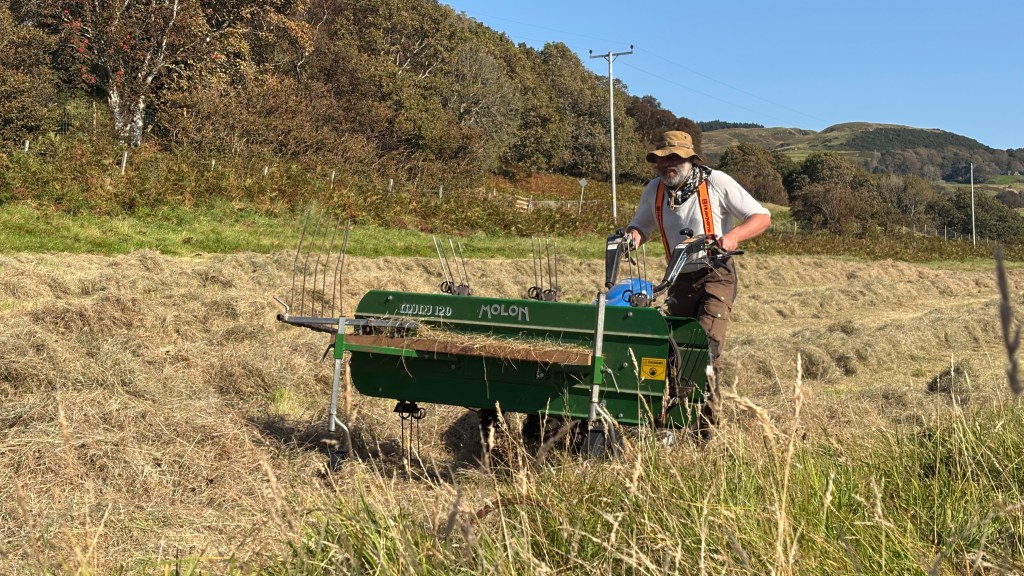
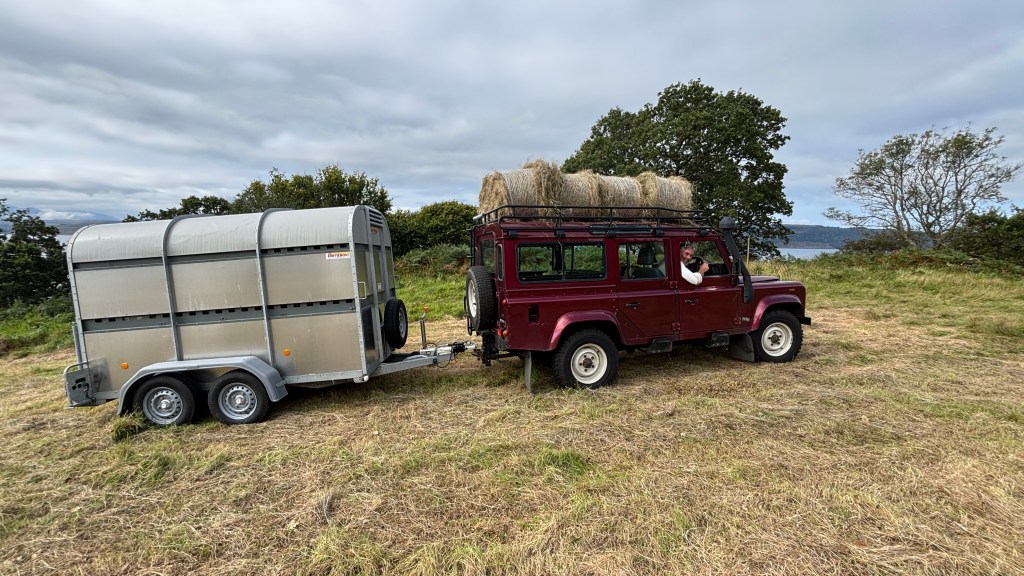
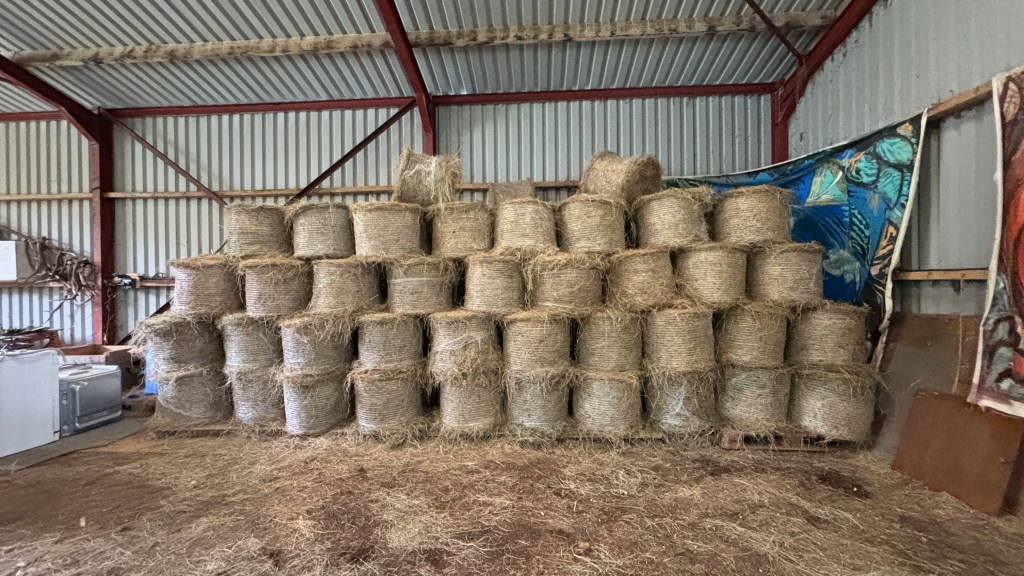
We recently bought a hay turner or “tedder” and mini-bailer for our walk behind tractor though, and these in addition to the scythe cutter we already had have revolutionised our haymaking. The two of us cut, turned, bailed and brought in more hay than we ever managed before without the need to ask a host of friends to come and help.
I really missed the comradery of collectively turning and bringing in hay. I felt a kinship with the others hay makers along the Drimnin road as I drove in to get more petrol for the tractor but it’s not the same as stooking together and travelling in trailer full of hay with six other weary people.
It didn’t feel great to be so reliant on voluntary labour though. People’s goodwill is amazing, and people say they enjoy it, but there are only so many favours you can ask even for fresh eggs and tomatoes and you can’t expect folk to drop everything the moment the sun shines. It also gets awkward if you have to explain that – yes the hay does feed the cows, and yes we sell the meat, and yes our beef prices are higher than most peoples’, but no we don’t make any profit. I’m never sure how much I should reveal about the true economics of our conservation-led croft as I don’t want to put others off. For the reality is we’ve ploughed a large proportion of our salaries from our other jobs into it since we’ve own it. We wouldn’t have it any other way, we love the place and it is our passion project and are prepared to invest everything we have in it. But I am really aware that the economics of a croft is hard even when you are aiming to make a profit food production.
It’s also taken me a while to be able to explain that creating a hay meadow, as well as producing food for the cows is also about biodiversity, as hay meadows are Britian’s fastest disappearing habitat (with 97% gone since the 1930’s). They were and are an important part of Britian’s species diversity.
It’s much easier to ask people to volunteer when the link to conservation and rainforests is clear. Not asking people to do the haymaking meant we could ask people to come and help push the deer from the wood and hill areas on the top half of croft before closing the new fence, even if it wasn’t quite as successful as our hay making, at least on the first attempt. We need to make sure there are no deer inside the fence as they can damage it if they are separated from their calves and try to escape; any deer impact at all will slow down the growth of the rainforest we want to regenerate and expand. Unfortunately the clash with the great weather for hay meant we didn’t gather quite enough people and although we had a very enjoyable afternoon– at least one deer broke through the line and we be will be trying again in September. We had fourteen people for the first attempt which was fantastic, but by our calculation we need about twenty.
We will be advertising this on the Lochaline Facebook page and our own but do get in touch if you would be willing to help rhemorewildcroft@gmail.com!


Leave a Reply