The vegetable garden has been a bit neglected at Rhemore this year. It’s been much harder to get down there because of the building works. We’ve also had no live-in WWOOF volunteers to help as there’s been nowhere to accommodate them.
It felt much wetter this summer than usual, with far more slugs, but when I checked the average rainfall and temperature have been the same as most years. Maybe it’s just been more changeable from one day to the next and perhaps also our lack of weeding has given the slugs more cover. The April heatwave this year might have also made it seem much colder. We got particularly excited when the polytunnel peach tree produced thirty delicious looking peaches this spring, only to find as each fell of the tree in the summer, we would bite in to find them all quite sour. A plan is in place next year for what to do with sour peaches.
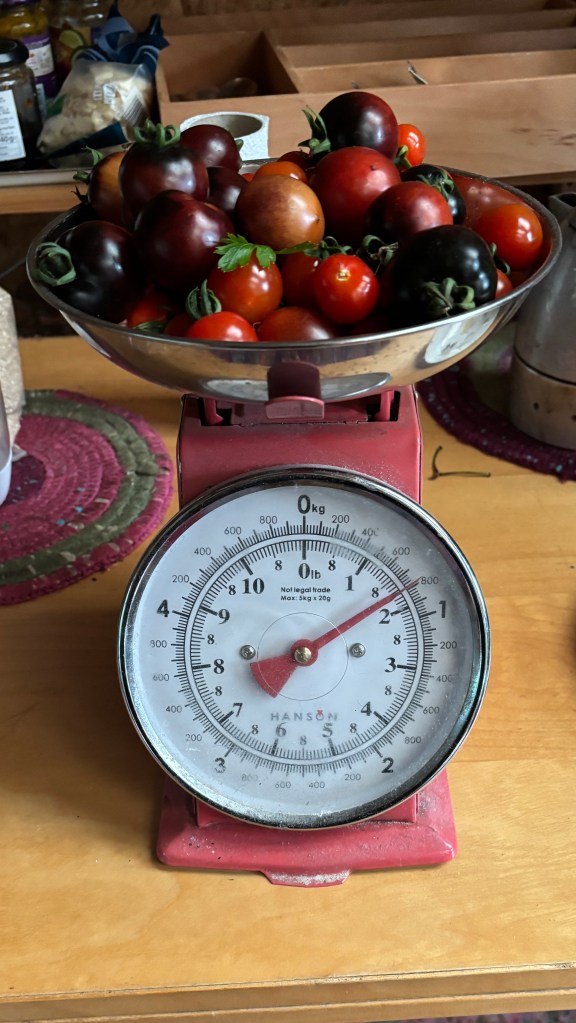
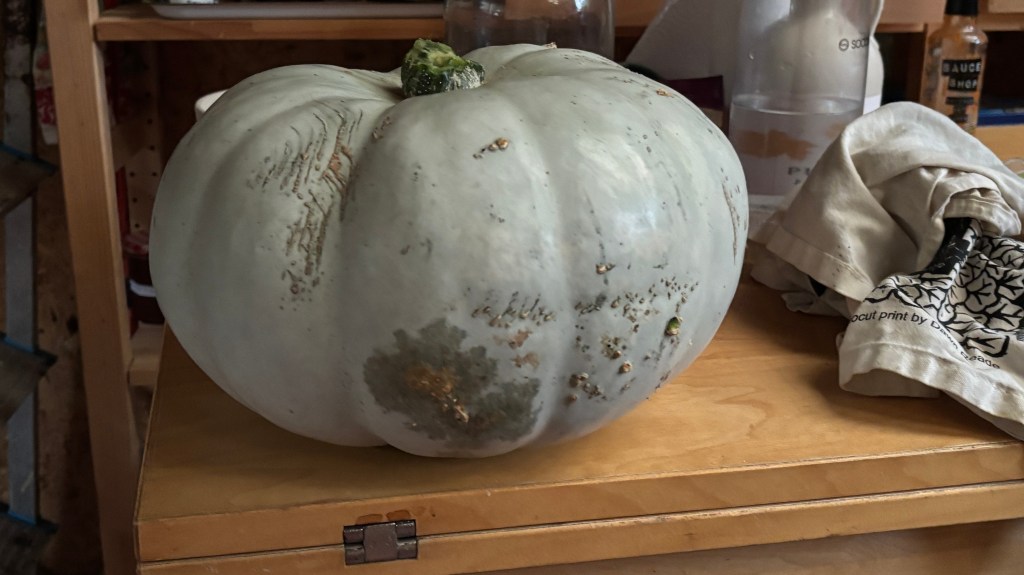
Despite the neglect and the havering weathering, we still had a surplus of produce. Tomatoes, cucumbers, onions, kale, pumpkins, beans and salad all did well. We’ve given away or swapped a lot with friends and family and this year, for the first time we sold some to the new community café. It’s been lovely knowing we’ve helped feed a whole range of people and create a bit of a circular economy, but it’s also been eye opener to the topsy turvy world of food production and consumer expectations.
Growing up and living in east London as a young adult, I always lived within walking distance of a street market where I could buy fresh vegetables from all over the world. I loved going there as a child, then as an adult, listening to the stall holders and picking out fresh stuff for dinner. When I moved to Knoydart in my early thirties, the nearest fresh produce was in the Mallaig Co-op, a boat ride away. A lot of this had been grown in Spain, flown to Scotland and driven to the central belt, before coming across on the boat to me. It was barely edible by the time it got to my plate and I quickly got an allotment and learnt as much as I could from the local growers. Twenty years later and I love growing vegetables. I like trying out new things each year and enjoy the constant learning curve. The weather is unpredictable, the slugs are an ongoing battle (especially growing organic), and trying to fit it around other things can be hard, so the yields are always variable and there are gluts or a dearth of something or other. So I have found gardening goes hand in hand with experimental cooking and preserving. There is such a joy in finding a new recipe that makes courgettes exciting again!
There are a lot of people growing and eating their own food here in Morvern, but, when it comes to the supply of fresh food to local supermarkets and restaurants in the UK, things have got worse in the last twenty years. We now only produce 60% of our own food (it was 80% in the 1990’s) and most of what we import is salad and vegetables. One thing I’ve noticed is how our habits have changed to buying foods for a specific recipe rather than creating recipes for the food that is available – which is harder but more creative.
When the café asked us to buy our surplus I wanted to keep the prices low to encourage them to use local and they were delighted how much longer our produce kept. But based on these prices, and the unpredictability of our weather and yield and inability to grow to demand – I quickly realised how hard and demoralising it might be to try and make a living growing and selling fresh veg and salad on a small scale from a croft. I’m not sure how we solve this but if you are ever passing Rhemore and want some greens we are always happy to give away surplus as long as you don’t mind what you get!


Leave a Reply