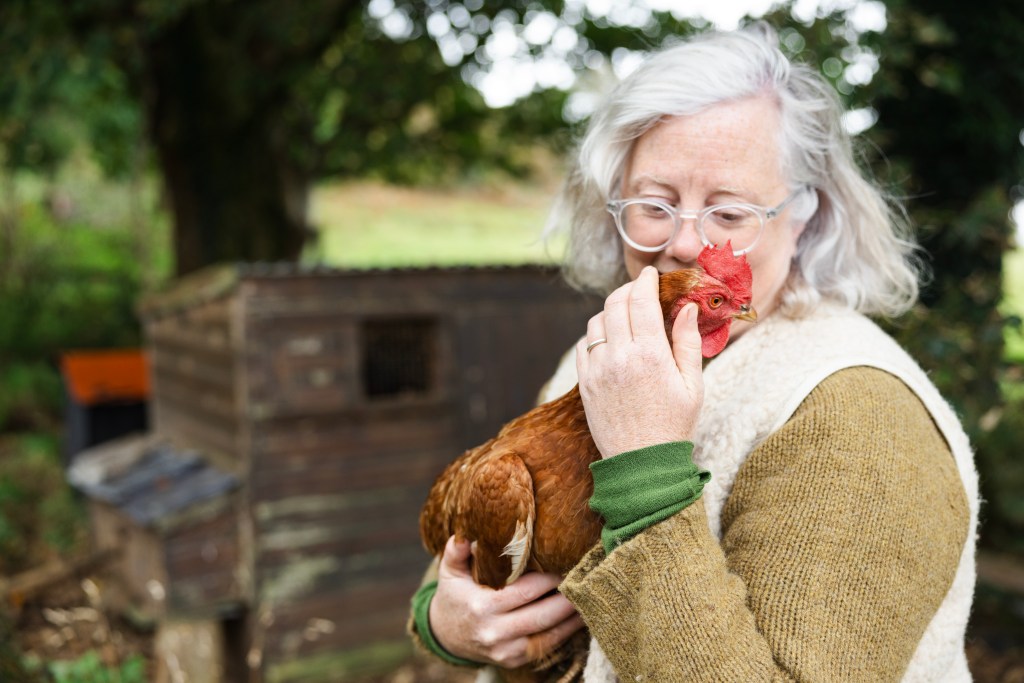
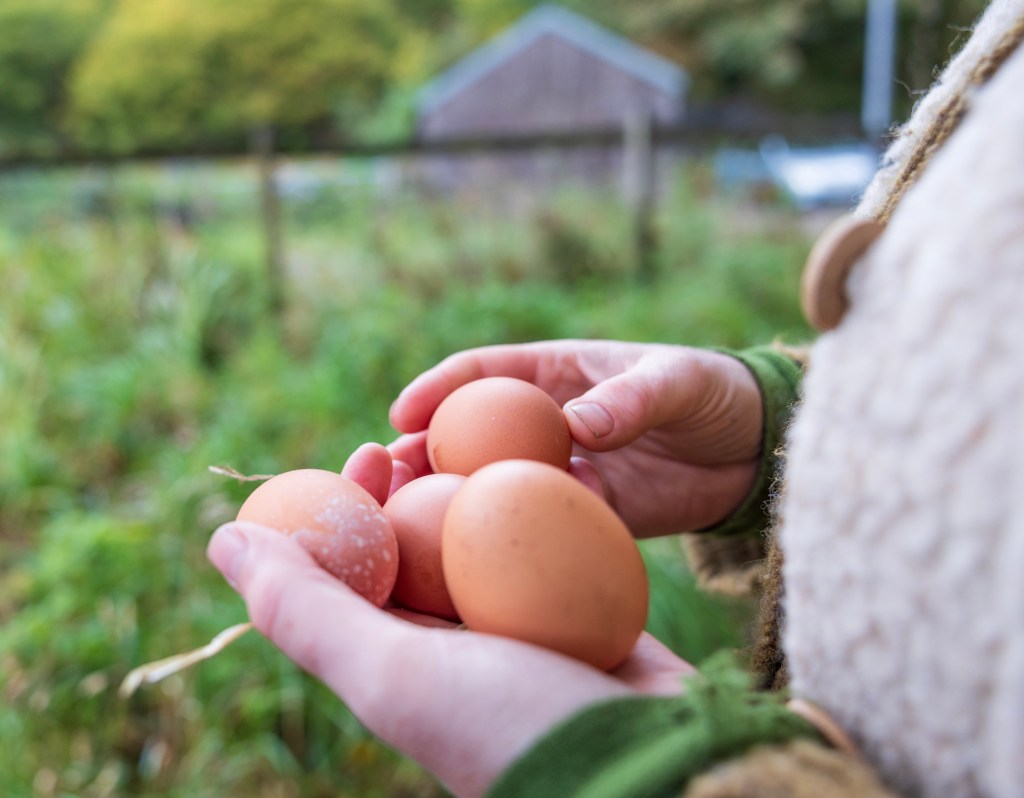
I really enjoy keeping chickens. Not just because of the abundance of fresh eggs and the good use of food scraps, but our most recent brood had become quite tame. Another chicken owner once told me they regularly cuddled their chickens and I could not see the appeal, but over the past few months several of our chickens had started squatting at my feet, waiting for me to pick them up and I found myself cuddling my chickens, particularly Fiona chicken.
When we were given our chickens to rehome, they came with an odd little hen, that was a last-minute replacement for another that had been killed. For no particular reason I called her Fiona. She didn’t seem that bright and wanted to be fed by hand, which was a pain. When she disappeared, we assumed she had wandered off too far and fallen prey to something. We were a bit sad, but not too fussed.
So, it took me by surprise how happy I was to see her again, when she appeared limping out of a clump of rushes, over a week later, mauled and missing feathers, but alive.
I had been trying to get the chickens into bed early and doing a lot of calling when she appeared and she must have heard me and come to my call. I was so relieved I scooped her up and held her and have cuddled her. Ever since then Fiona chicken has expected a cuddle before bed every night.
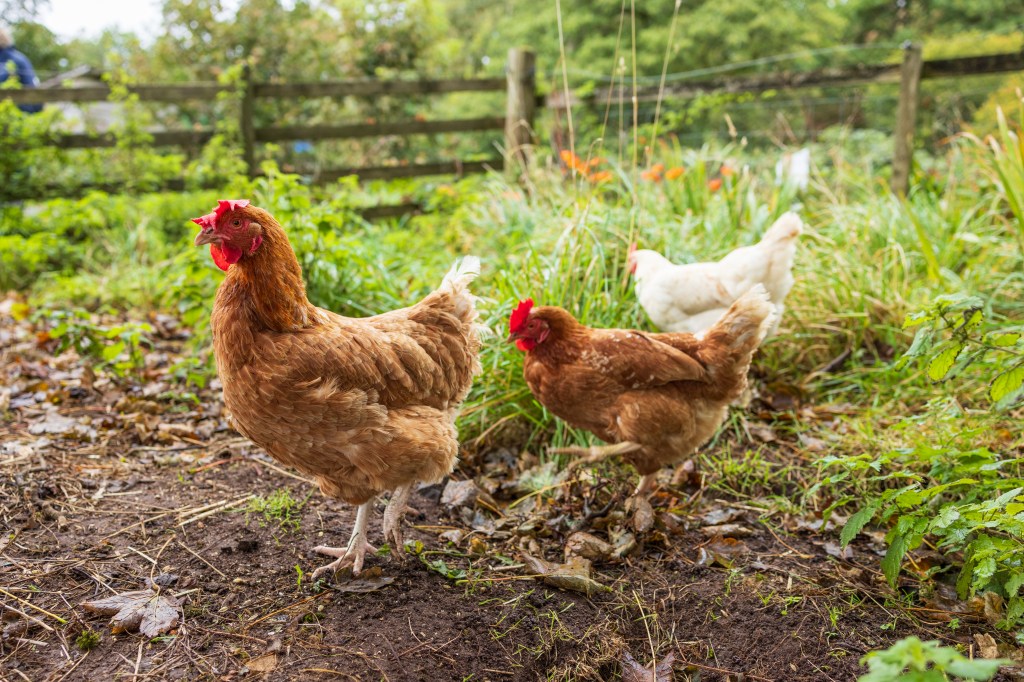
Quite a few folks along the Drimnin road tell us how much joy the chickens bring them, even though they regularly escape onto the road, slowing drivers down. “It makes the place feel alive”, people say. And it’s true, for you only find chickens where people live year-round and are rooted in a place.
It is also a delight to see them pecking down in the fields, eating spaghetti, or catching the brambles and sloes I throw to them.
Every now and then there was evidence of something trying to get into the hen house and I would do some shoring up. As winter drew in and it got colder and darker, I approached the hen house each morning with a bit more trepidation, relieved when my call of “morning chick-chickens!” was returned with a chorus of cluck-cluck-clucks.
So, it was a blow, if not an absolute shock, when one morning last week my call was met with silence and I found all five hens dead. Almost certainly killed, by a pine marten that managed to get into the coop.
When I moved to the Highlands, I’d never even heard of a pine marten and thought it was some kind of bird. I fell in love when I saw one in Knoydart, where my neighbour fed them bread and jam on his porch and have loved seeing them regularly on the Drimnin road; the way they lollop; their little faces, big ears and big paws making them naturally endearing.
Lots of people hate pine martens because of what they do to chickens. You often hear people say that martens kill for fun, as it’s quite common for a marten to kill a whole flock and leave the carcasses behind uneaten – as they did with ours.
I can imagine in a time when people relied on eggs as their main food source and couldn’t get them anywhere else, I would want to keep the martens off my croft and might even hate them for killing my chickens. So, it makes sense to me, why, for a while, they were nearly extinct in the UK.
But we don’t live in that time anymore and I don’t hate pine martens, despite their murderous instincts and how dead it feels on the croft now without our chickens. I just feel bad I didn’t act more quickly on the signs the martens were about and replace the hen coop sooner, (which we planned to do as soon as we had finished our own house), and that we didn’t make sure there wasn’t even the tiniest of gaps a predator could get in through.
I don’t think any animal kills “for fun” – even our cats when they practice their hunting skills with live prey. I believe the martens like other creatures are just following their animal instincts.
Finding a lot of chickens confined in a hen house is not a natural situation for a pine marten that must usually hunt its food. It can’t reflect on whether it needs all of what is available, its instinct is to kill prey, because it is a predator. And so, it kills.
Killing for fun, sport, or status, to me, seems a uniquely human concept. It is also uniquely human to conjure up stories of malice or evil in others (whether people or animals) to justify our own behaviour when it is driven by hate.
Pine martens are just another part in a complex ecological jigsaw that we humans still don’t fully understand. Interestingly red squirrels have been shown to recover or return more quickly when pine martens are present, because martens predate more easily on the non-native grey squirrels than on the native red ones.
So, with the unwanted food scraps piling up, and a croft that seems far too quiet, I am in no doubt we will get more chickens; a more secure hen house is on the list first. I hope we don’t lose any more to pine martens, but if we do, I’ll try to remember all of the above.
And in the meantime, it still makes me happy to see pine martens on the croft, loose chickens on the road, red squirrels in Morvern’s woods, and even all the humans in my life – despite our worst traits.


Leave a Reply